Google has updated its Review Snippet structured data documentation to explicitly prohibit fake reviews and undisclosed incentivised reviews in Review and AggregateRating markup. The core star-rating rich result hasn’t changed shape, but the guidelines now name the exact behaviour Google is watching for, which makes it a useful moment to check whether your existing review schema would hold up.
Key Takeaways
- Google’s review snippet guidelines now explicitly ban reviews that aren’t based on a genuine experience, and reviews written for money, discounts, vouchers, or free products without clear disclosure.
- This sits alongside the existing rule that a business can’t mark up star ratings about itself using LocalBusiness or Organization schema, known as the self-serving reviews restriction.
- The guidelines still require ratings for local businesses and organisations to be sourced directly from users, not compiled or curated by human editors.
- Violating the review snippet guidelines can trigger a manual action, which strips the structured data from search results until the issue is fixed and reconsideration is requested.
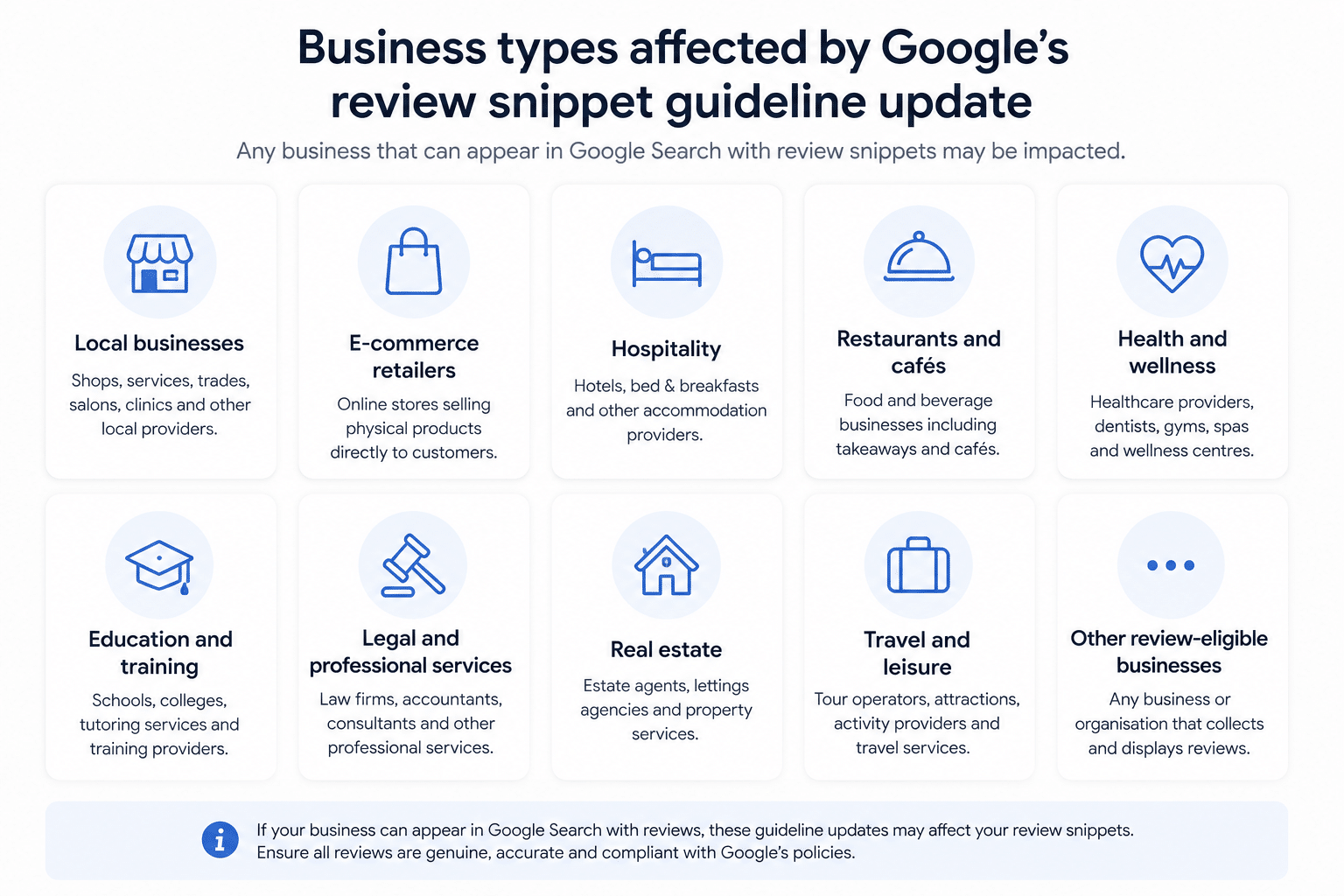
- Ecommerce sites, local businesses, and review or comparison sites are the categories most likely to be affected, since they’re the heaviest users of Review and AggregateRating markup.
What changed in Google’s review snippet documentation
The update sits inside the “Technical guidelines” section of Google’s Review Snippet page, which governs both the Review and AggregateRating schema.org types. Two new points were added directly addressing review authenticity.
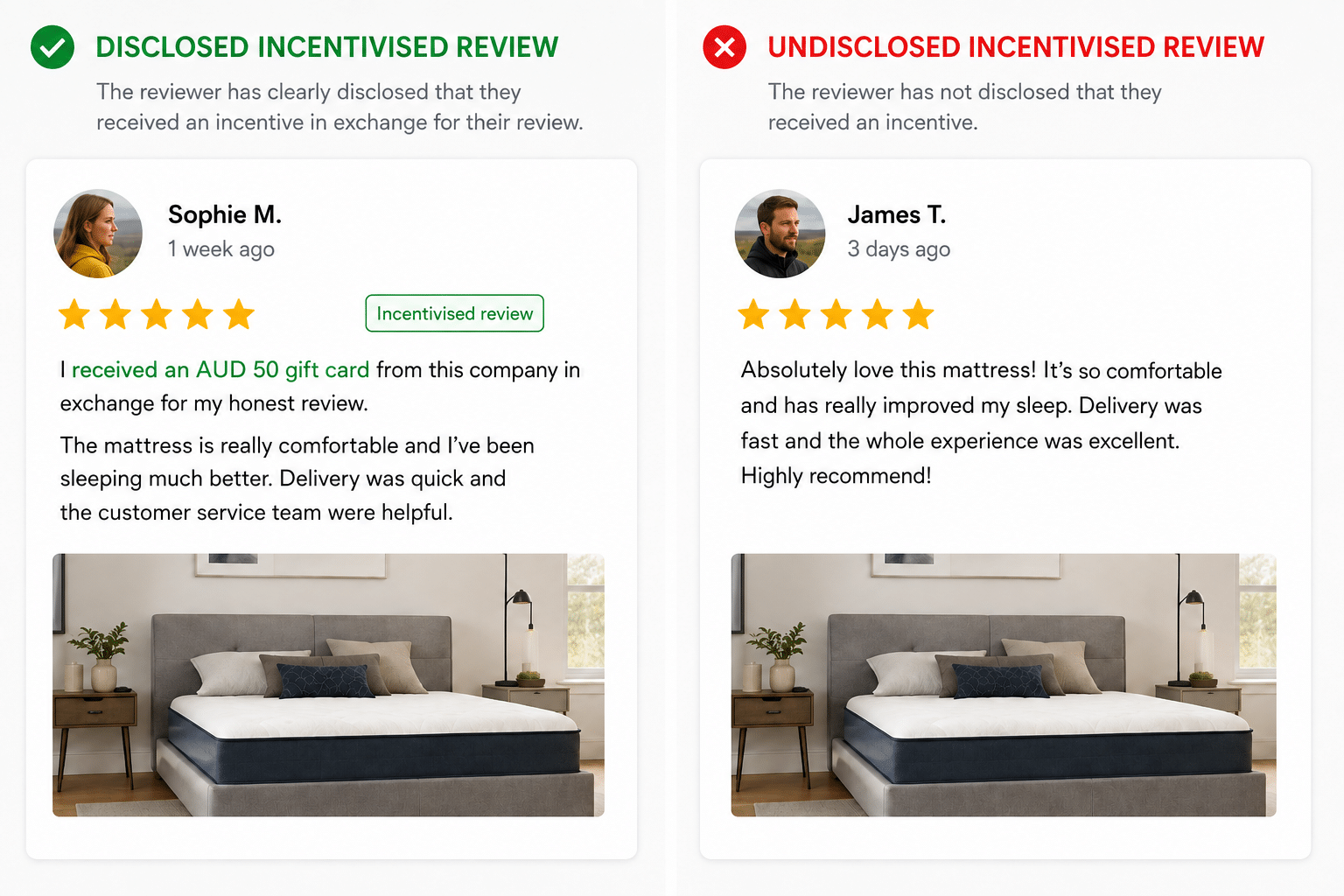
The first rules out reviews that don’t reflect a genuine experience of the product or service being marked up. The second addresses incentivised reviews specifically: content written in exchange for money, discounts, vouchers, or free products no longer qualifies for rich result eligibility unless the incentive is disclosed clearly and prominently.
Neither of these is a new concept for Google. Manipulated and paid reviews have been treated as a spam problem across Google Business Profiles and Google Maps for years. What’s changed is that the expectation is now written directly into the structured data guidelines, which means it’s enforceable against the schema markup itself, not just against the review platform hosting it.
Why this matters for AggregateRating and Review schema specifically
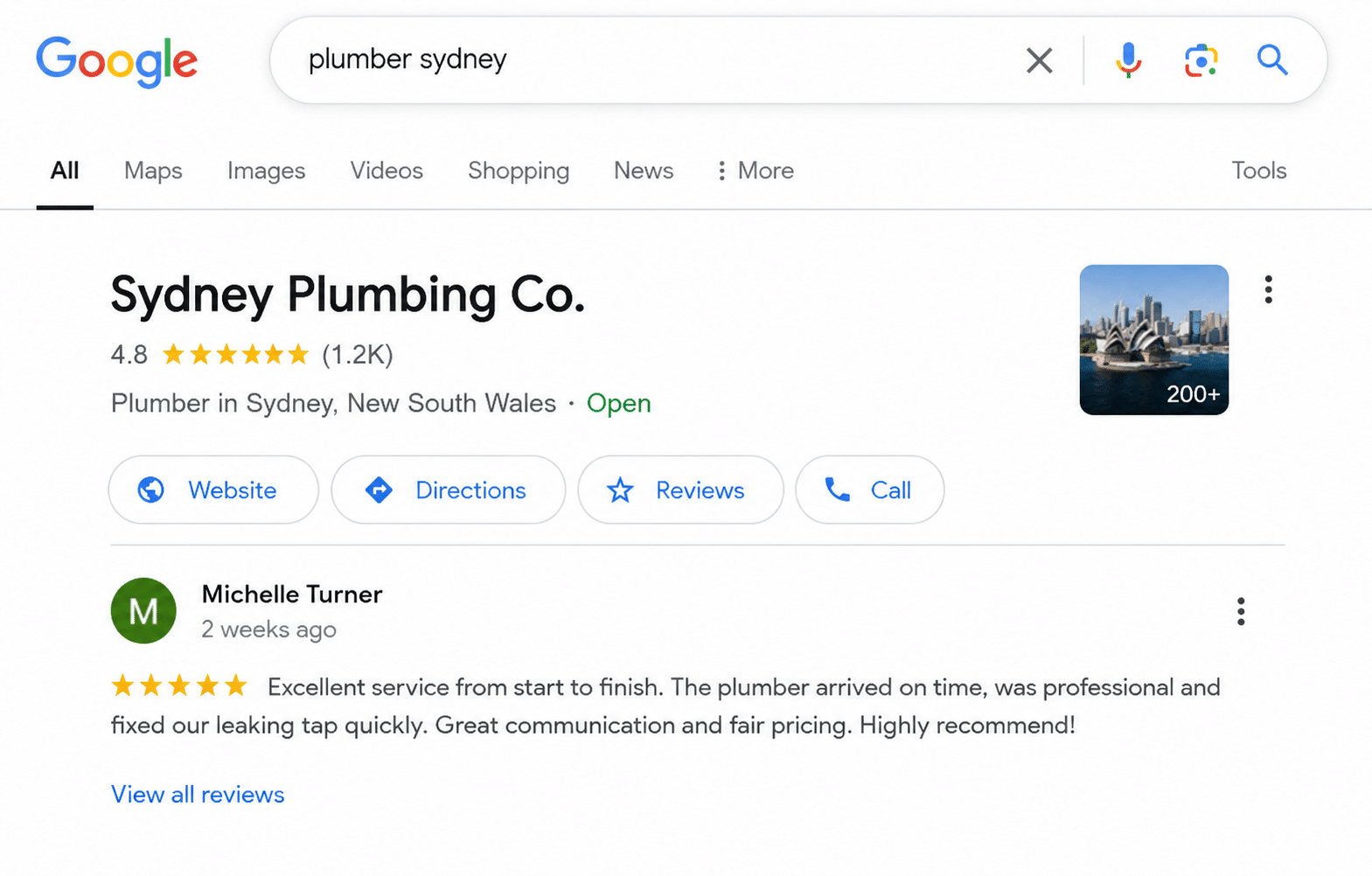
Star ratings in search results are one of the highest-visibility rich results available, because they appear directly in the blue link area rather than requiring a click to see. That visibility is exactly why Google polices this type of markup more tightly than most other structured data.
The existing rules already required that ratings be genuine and that businesses not review themselves. What this update adds is a documented standard for what counts as fake: content not based on a real experience, and content produced under an incentive that isn’t disclosed. A site running a “leave a review, get 10% off your next order” campaign without disclosing that in the review itself now sits squarely inside the guideline, not just in a grey area.
The practical risk is a manual action. Google’s own guidance for this feature carries an explicit warning that non-compliant structured data can trigger manual action, and once that happens, the structured data is ignored across the site until the issue is resolved and reconsideration is requested. That’s the rich snippet gone from every page using the affected markup, not just the one page that triggered it.
Who this affects
Ecommerce websites are the most exposed group, because Product and Offer schema commonly nests Review and AggregateRating data, and review-collection tools sometimes incentivise submissions through discount codes or loyalty points without building disclosure into the review text itself.
Local businesses need to be careful with a different part of the guidelines. LocalBusiness and Organization schema is ineligible for the star review rich result entirely when the business being reviewed controls the reviews about itself, whether that’s through the site’s own structured data or an embedded third-party widget like a Google reviews plugin. This rule predates the recent update, but it’s frequently missed, and it’s the one that catches out well-meaning local business sites the most.
Review and comparison websites carry the most direct responsibility under the new wording, since collecting and publishing third-party reviews is the core function of the site. Aggregating reviews or ratings sourced from other websites is explicitly disallowed, and any incentive arrangement with reviewers, including affiliate relationships that reward positive coverage, needs to be handled with the same disclosure standard.
What genuine and disclosed actually look like in practice
Google’s guidance recommends only accepting ratings that come with a review comment and the reviewer’s name, since that’s what gives a rating credibility beyond a bare number. It’s not a strict requirement, but sites that skip it tend to have thinner, less defensible review data if the markup is ever questioned.
Disclosure needs to sit inside the review content itself, not buried in a separate terms page. If a reviewer received a discount code for leaving feedback, the honest version of that review says so in the text, and that disclosure should be visible to users reading the page, not just present somewhere in the schema. A rating tucked away in JSON-LD that doesn’t match what a visitor can see on the page is also a separate problem: Google requires that review content be readily apparent on the page itself, not markup added without a visible counterpart.
For local businesses using a third-party widget, the safest position is treating that widget as informational only and not wrapping it in Review or AggregateRating structured data, since the self-serving reviews rule applies regardless of whether the reviews are genuine.
How to check if your review schema is at risk
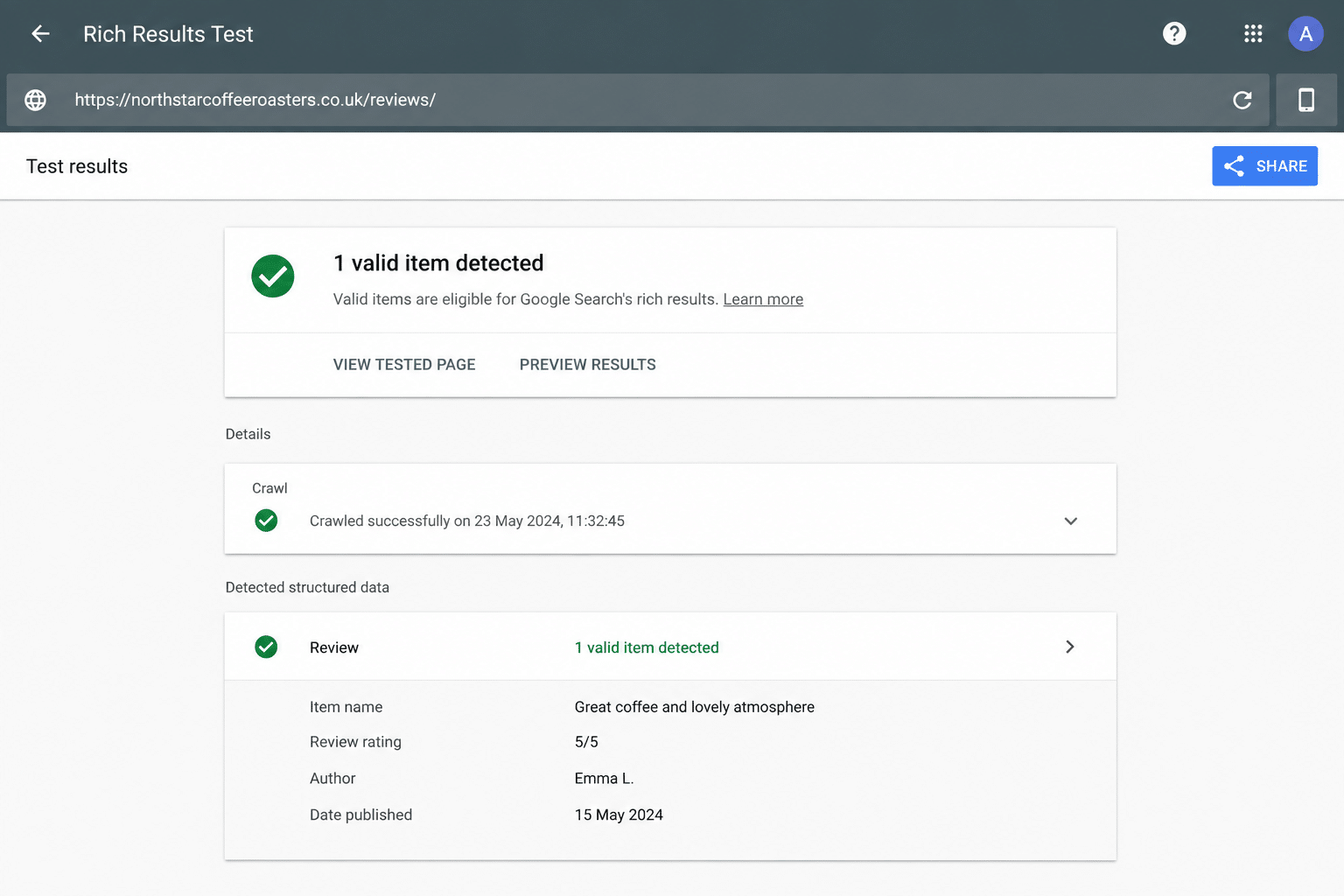
Start with the Rich Results Test on a handful of pages using Review or AggregateRating markup, and confirm the ratings shown there match what a visitor actually sees when they land on the page. Then check Search Console’s rich result status report for the relevant feature, looking for a drop in valid items or a rise in invalid ones, since either can be an early signal.
From there, it’s a content question rather than a technical one. Walk through where the reviews actually come from: are they submitted directly by customers, are any tied to an incentive, and if so, does the review text disclose that. For local business pages, confirm whether any review widget on the page is wrapped in structured data it shouldn’t be. This is a five-minute check on a small site and worth doing before assuming the existing markup is fine.
Getting review schema wrong doesn’t just cost the rich result, it can flag the whole site for review. If you’re not sure your structured data would hold up, Arvo’s technical SEO team can audit your existing schema and fix what’s putting your rich results at risk.